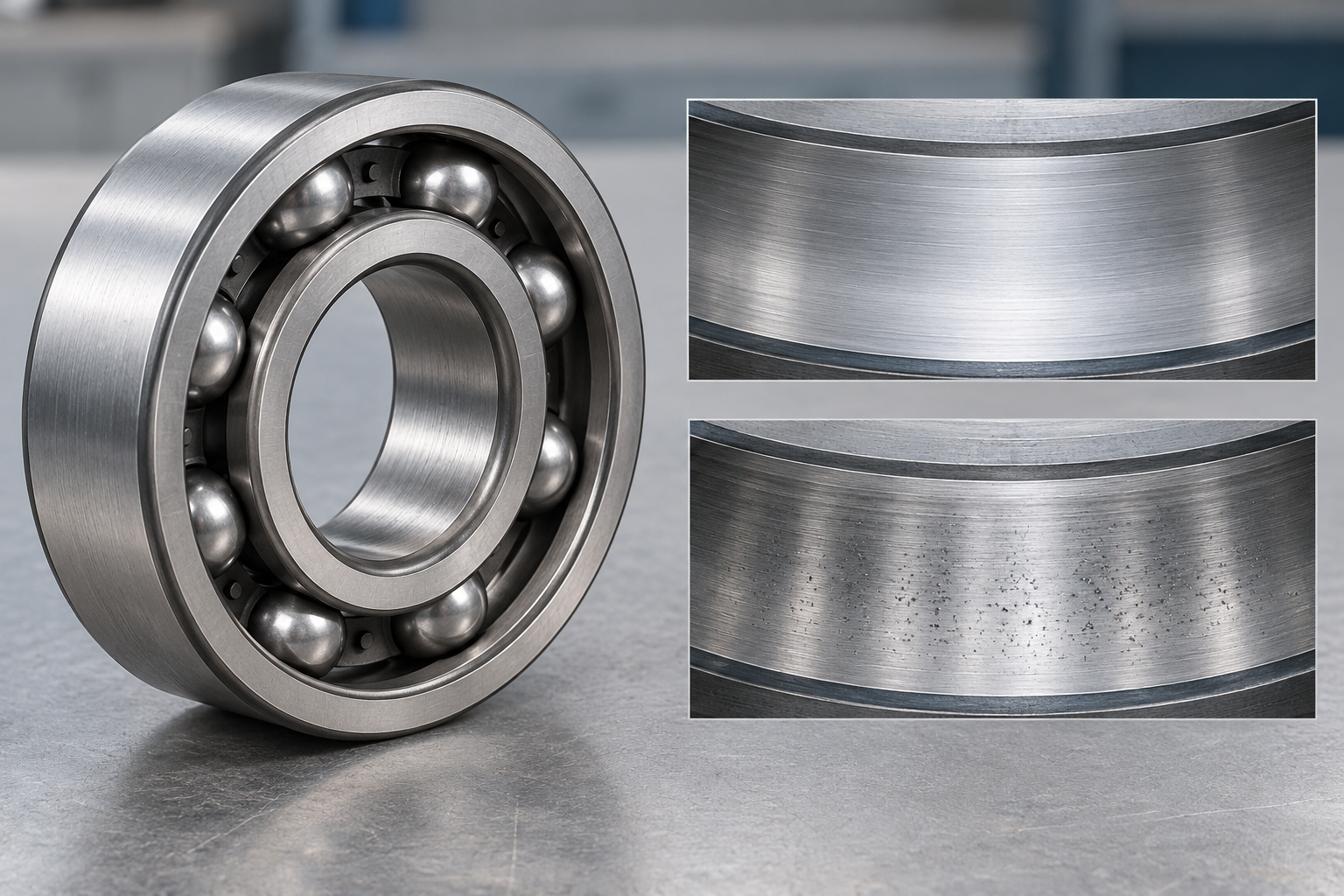
Electrical current passing through a rolling bearing can create localized arcing at the contact between rolling elements and raceways. Depending on the damage and inspection scale, a bearing may show small pits, a dull gray surface, discoloration, or repeated groove-like bands often described as fluting or a washboard pattern.
These marks are useful clues, but a visual pattern alone cannot establish the root cause. Similar-looking surface changes can have other explanations, and damage may develop in stages. A variable-frequency-drive (VFD) motor is one possible context for bearing-current concerns—not proof that current damage has occurred. This is an identification and documentation guide, not an electrical repair procedure.
Contents
- How electrical current can affect a bearing
- What possible electrical damage may look like
- Why fluting needs careful interpretation
- What to document before replacing or cleaning the bearing
- Keep the investigation and corrective action system-level
- A practical review checklist
- Frequently Asked Questions
How electrical current can affect a bearing
When current crosses the thin lubricant film between a rolling element and a raceway, localized electrical discharge can heat and alter small areas of the surface. Repeated or sustained events can leave many small marks and may also affect the lubricant near the contact area. NSK describes electrical corrosion as arcing and localized melting at rolling contacts; SKF’s bearing-damage guidance distinguishes early electrical surface damage from fluting that can develop later.
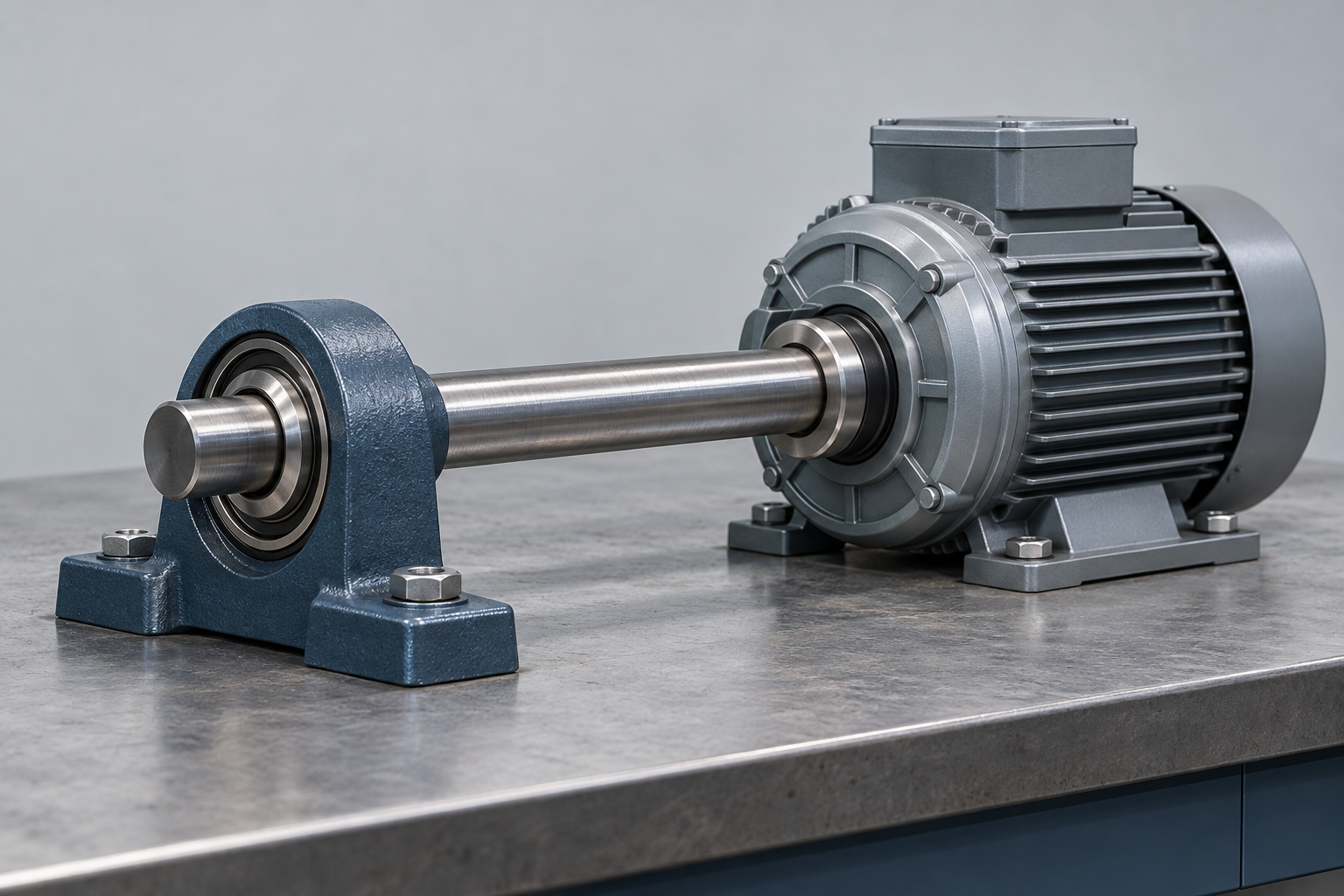
Current-related damage may be discussed in motor applications, including systems using variable-speed drives. The actual current path depends on the complete motor, drive, shaft, grounding, cable, coupling, and machine arrangement. Do not infer a system fault or select a countermeasure from the bearing appearance alone.
What possible electrical damage may look like
Depending on the stage and inspection method, signs described in bearing references include fine pits or crater-like marks on a raceway or rolling element; a dull or gray surface in the rolling contact area; discoloration or localized burn-like areas; repeated, closely spaced bands or a washboard-like pattern on a raceway; and changes in noise or vibration after the damage begins to affect rolling contact.
The visible pattern is not a stand-alone test. Some early marks require magnification to see, and later surface patterns need to be interpreted alongside the bearing’s location, operating history, and surrounding equipment. A photograph can support a review, but it does not replace an appropriate inspection or failure analysis.
Why fluting needs careful interpretation
“Fluting” is commonly used for repeated corrugations or a washboard appearance on a rolling surface. NSK lists groove-like fluting among possible electrical-corrosion damage conditions. SKF explains that electrical micro-craters can precede fluting, which may develop as a secondary effect as rolling elements pass over damaged areas. SKF also notes that a washboard-like appearance can have other causes in some cases.
For that reason, use language such as “possible electrical erosion” or “a fluting-like pattern” until the responsible technical reviewer has assessed the evidence. Avoid diagnosing current damage from noise, vibration, or a single image alone. For broader symptom checks, see Cixi CTZ’s bearing noise, vibration, and overheating troubleshooting guide.
What to document before replacing or cleaning the bearing
If a bearing is removed for inspection, preserve the evidence and follow site safety procedures. Before cleaning or discarding parts, record the full insert and mounted-unit designation and suffixes; which component shows the marks; damage location and orientation if known; clear overall and close-up photos; when noise, vibration, heat, or repeat replacement was noticed; recent motor, drive, cable, coupling, or maintenance changes; known duty conditions; motor and drive identifiers; bearing position and shaft arrangement; grounding/bonding records and any qualified inspection findings; lubricant and maintenance history; and whether similar marks appear at other positions. Leave uncertain details marked as unknown. Do not scrape or polish surfaces to improve a photograph.
The bearing failure documentation checklist explains how to preserve condition evidence before cleaning or disassembly. For general replacement identification and safe handling points, also see the insert bearing installation guide.
Keep the investigation and corrective action system-level
Do not open a VFD, touch conductors, or perform live electrical measurements as part of a bearing inspection. Isolate equipment under the site’s approved procedure. Electrical inspection and any change to motor grounding, cable routing, shaft-grounding equipment, or bearing insulation should be reviewed by qualified personnel against the complete machine design and applicable product documentation.
Different countermeasures exist in the bearing industry, but they are not interchangeable instructions for every motor or mounted-unit installation. A change that redirects current may affect other components. Confirm the suspected mechanism and review the complete system with the responsible motor or equipment engineer before selecting a replacement or modification. Do not assume Cixi CTZ offers an electrically insulated bearing unless that property is stated for the exact model in its documentation.
A practical review checklist
| Review item | What to record or confirm |
|---|---|
| Bearing | Full model, suffixes, location, and removed-part identification |
| Surface evidence | Photos of each marked component before cleaning; describe marks without claiming a cause |
| Symptoms | Noise, vibration, temperature observations, timing, and repeat history |
| Equipment context | Motor, drive, coupling, shaft arrangement, and recent changes known to the site |
| Electrical review | Findings from qualified personnel; do not guess at grounding or current paths |
| Proposed action | Written confirmation for the exact bearing, machine, and system before changing parts or wiring |
Key takeaways
Electrical discharge can create localized rolling-contact damage; pits, gray areas, or fluting-like bands are clues, not a complete diagnosis. Fluting may be a later development, and a similar surface pattern can have other explanations. Preserve photos, model markings, operating history, and system context before cleaning or replacing parts. Keep electrical inspection and any grounding, cabling, or bearing changes within qualified, system-level engineering review.
For a Cixi CTZ bearing inquiry, send the full model or clear photos, quantity, and the application context to ctz@ctz-bearing.com. WeChat: DM161116. Product suitability and any electrical-insulation property must be confirmed for the exact model in writing.
Key Takeaways
- Electrical discharge can create localized rolling-contact damage; pits, gray areas, or fluting-like bands are clues, not a complete diagnosis.
- Fluting may be a later development, and a similar surface pattern can have other explanations.
- Preserve photos, model markings, operating history, and system context before cleaning or replacing parts.
- Keep electrical inspection and any grounding, cabling, or bearing changes within qualified, system-level engineering review.
Frequently Asked Questions
What is electrical damage in a bearing?
It is surface damage that can occur when electrical discharge crosses a rolling contact. Depending on the event and inspection scale, references describe pits, dull or discolored areas, or later groove-like patterns. The exact cause should be confirmed by a qualified review rather than inferred from appearance alone.
Does a washboard pattern prove that current passed through the bearing?
No. Fluting can be associated with electrical damage, but the pattern is not conclusive by itself. SKF describes fluting as a possible secondary development after electrical micro-cratering and notes that similar appearances may have other explanations. Inspect the complete evidence and equipment history.
Can a VFD cause bearing current damage?
A VFD-driven motor is a recognized context for bearing-current concerns, but a VFD’s presence does not prove that a particular bearing has current damage. The current path depends on the complete motor-drive-machine arrangement and should be assessed by qualified personnel.
Should I replace a bearing as soon as I see fluting?
Do not base a replacement decision on one visual sign alone. Follow site procedures for taking the equipment out of service, document the bearing and operating evidence, and have the responsible maintenance or engineering team assess both the damage and the suspected cause.
Will adding grease fix electrical erosion?
Grease is not a substitute for identifying an electrical current path. Lubrication condition may need its own review, but adding grease does not establish or correct the cause of electrical surface damage. Follow the exact bearing instructions and maintenance plan.
What information should I send for a bearing review?
Provide the full model markings, bearing position, clear photos before cleaning, symptom timeline, known motor and drive context, maintenance history, and any equipment drawing or qualified inspection findings. Mark unknown or approximate details clearly.
Need bearing units for your market?
Send us the model number, quantity, packing requirement and destination port. Our sales team will reply with a competitive quotation and delivery schedule.
Send Inquiry