Agricultural bearings may be offered with round, square, or hexagonal bores to match different shaft profiles. Identifying the shape is a useful first step, but the shape alone does not confirm that a replacement bearing will fit the machine.
Before ordering, confirm the complete bearing designation, shaft profile and size, unit dimensions, retention method, and any relevant drawing or sample. This checklist is for identification and purchasing preparation; it does not replace machine isolation procedures or product-specific installation instructions.
Contents
- 1. Identify the shaft profile before selecting a bearing
- 2. Measure the profile and record the units
- 3. Confirm more than the bore shape
- 4. Treat fit and retention as separate checks
- 5. Make the replacement inquiry easy to verify
- Common identification mistakes
- Frequently Asked Questions
1. Identify the shaft profile before selecting a bearing
Start with the shaft itself and the full designation on the existing bearing, if readable. Do not identify a product only from its appearance or from a partial model number.
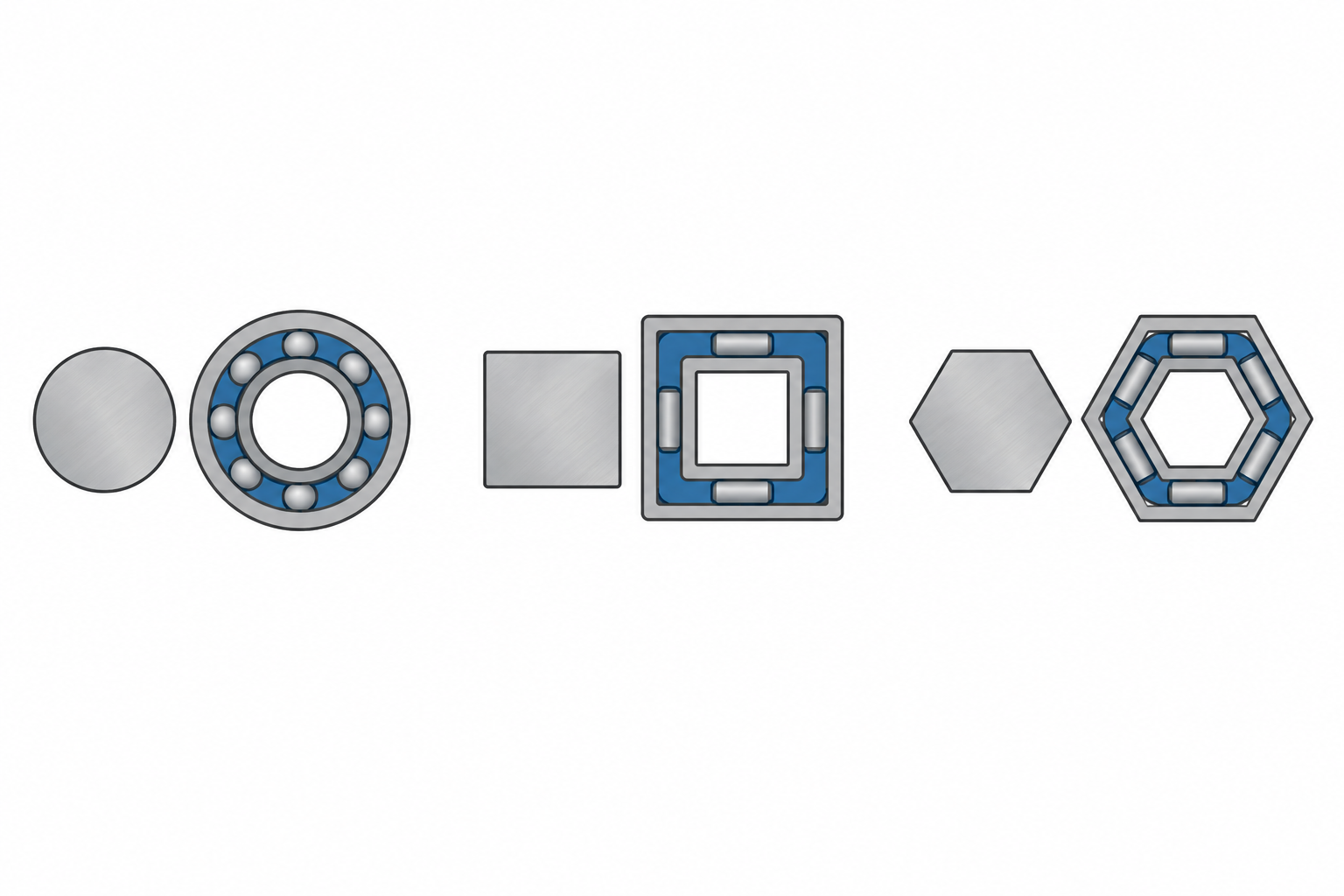
Round bore
A round bore is intended to match a cylindrical shaft. Record the shaft diameter with its units, and check the shaft surface for wear, corrosion, burrs, or damage where the bearing sits. Also verify the bearing’s specified locking or retention arrangement; “round bore” does not tell you how the unit is secured.
Square bore
A square bore is intended to match a square-profile shaft. Record the across-flats size and compare it with the exact model drawing. Note the shaft’s condition and any nearby shoulders, spacers, or retention features that affect where the bearing sits.
Hex bore
A hex bore is intended to match a hexagonal shaft. Record the across-flats measurement and orientation, then compare the profile with the bearing drawing or a confirmed sample. Do not assume that two hex shafts with similar-looking dimensions are interchangeable.
CTZ’s Agricultural Bearings page lists round, square, and hex bore configurations. Check the specifications and drawing for the exact proposed model rather than inferring a bore size or type from a neighboring model.
2. Measure the profile and record the units
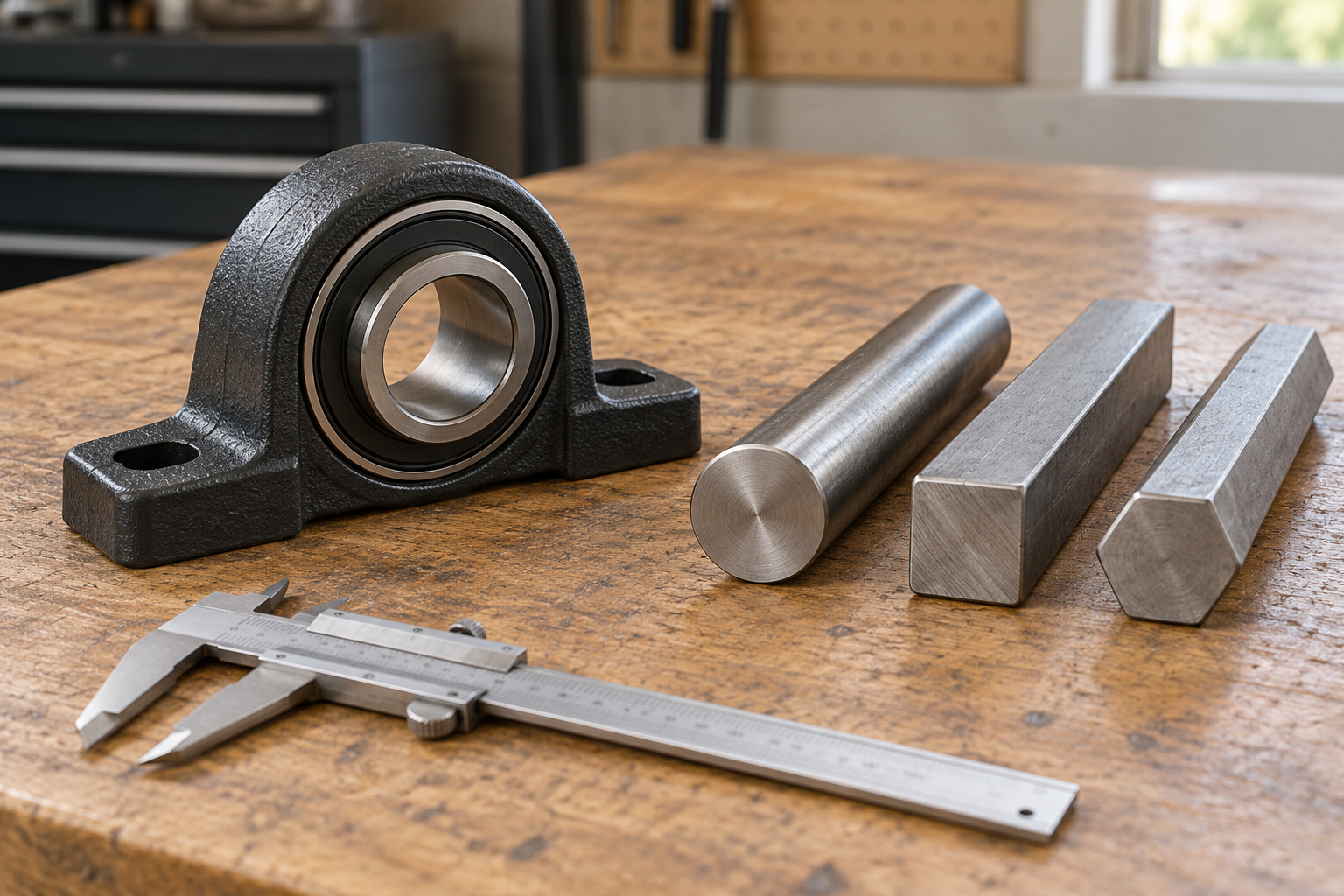
Clean the accessible shaft area and use an appropriate measuring tool. If the machine must be accessed, follow the equipment owner’s lockout and safety procedures; do not take measurements near a moving or energized shaft.
For a useful inquiry record: bore profile (round, square, or hexagonal); measured size and unit (millimetres or inches); measurement method and exact surfaces measured; shaft condition at the bearing seat; nearby shoulder, spacer, groove, key, or other feature; and the complete model marking with clear photographs, if available.
For square and hex profiles, do not convert an across-corners measurement into an across-flats size by assumption. Record what was actually measured and compare it with the dimension drawing’s stated reference. If a measurement is uncertain, label it as approximate rather than presenting it as confirmed.
3. Confirm more than the bore shape
Even when the profile appears to match, compare the complete bearing specification. Depending on the product, relevant details may include the full model designation and suffixes; bore profile and nominal size; bearing outside dimensions and width; housing or mounting arrangement; locking or axial-retention components; seal configuration and lubrication requirements; and any spacers, collars, covers, or other parts supplied with the assembly.
Do not assume that a matching shaft profile means the whole bearing is a direct replacement. The pillow block bearing replacement checklist covers additional identification and mounting details to collect for a replacement request.
4. Treat fit and retention as separate checks
The bore profile is the shape of the shaft-to-bearing interface. It does not, by itself, specify every method used to locate or retain the bearing in the assembly. Check the product drawing and supplier documentation for the exact design, including any stated collar, fastener, shoulder, or other retention detail.
Never force a bearing onto a shaft because the profiles look close. A mismatch, damaged shaft, or unconfirmed fit can affect installation and service. If the marking is unclear or a proposed bearing differs from the original, request a written review using the model, measurements, photographs, and equipment drawing where available.
5. Make the replacement inquiry easy to verify
Send the same core information to the supplier in one message or table. Mark unknown details as unknown instead of guessing.
| Inquiry field | What to provide |
|---|---|
| Existing bearing | Full designation, suffixes, and readable markings |
| Shaft profile | Round, square, or hexagonal |
| Measurement | Actual size, units, and the surfaces measured |
| Condition | Wear, corrosion, burrs, damage, or uncertainty at the bearing seat |
| Assembly | Bearing only or complete assembly; include other parts that must be retained |
| Reference | Product drawing, equipment drawing, sample reference, and photographs |
| Order request | Quantity, packaging requirement, and destination details |
Common identification mistakes
Avoid choosing by bore shape without checking the full designation and dimensions; recording a measurement without units or reference faces; confusing across-flats and across-corners measurements; assuming retention from the shaft profile; treating an approximate measurement as confirmed; or forcing a bearing onto a shaft before fit and condition are verified.
Key takeaways
Identify whether the shaft and bearing bore are round, square, or hexagonal before requesting a replacement. Record measurement references and units, then confirm the complete model, dimensions, retention details, and drawing. Do not force a questionable fit; request a documented review when identification or compatibility is uncertain.
For a Cixi CTZ agricultural bearing inquiry, send the model or photos, shaft profile and measurements, quantity, and packing requirement to ctz@ctz-bearing.com. WeChat: DM161116.
Key Takeaways
- Identify whether the shaft and bearing bore are round, square, or hexagonal before requesting a replacement.
- Record the measurement reference and units; do not confuse across-flats and across-corners dimensions.
- Confirm the complete model, dimensions, retention details, and drawing instead of relying on bore shape alone.
- Do not force a questionable fit; request a documented review when identification or compatibility is uncertain.
Frequently Asked Questions
What bore types are available for agricultural bearings?
CTZ’s agricultural bearing product information lists round, square, and hex bore configurations. Availability and dimensions depend on the exact model, so confirm the designation and drawing before ordering.
How do I measure a square or hex bearing shaft?
Record the profile and measure the relevant faces with an appropriate tool. State whether the reading is across flats or another reference, include units, and compare it with the exact product drawing. Do not substitute one measurement convention for another without confirmation.
Does a matching bore shape guarantee a direct replacement?
No. Also compare the complete model, bore size, outside dimensions, width, retention components, seals, and any mounting or adjacent parts that must remain compatible.
Can I install a square- or hex-bore bearing on a round shaft?
Do not assume the parts are compatible or force them together. Use the specified shaft profile and size for the exact bearing, and ask the supplier or responsible equipment engineer to review any proposed alternative.
What should I send if the old agricultural bearing marking is unreadable?
Provide clear photos of the bearing and installation, the shaft profile and measured dimensions with units, relevant equipment or product drawings, and the quantity required. Mark any uncertain details clearly.
Need bearing units for your market?
Send us the model number, quantity, packing requirement and destination port. Our sales team will reply with a competitive quotation and delivery schedule.
Send Inquiry